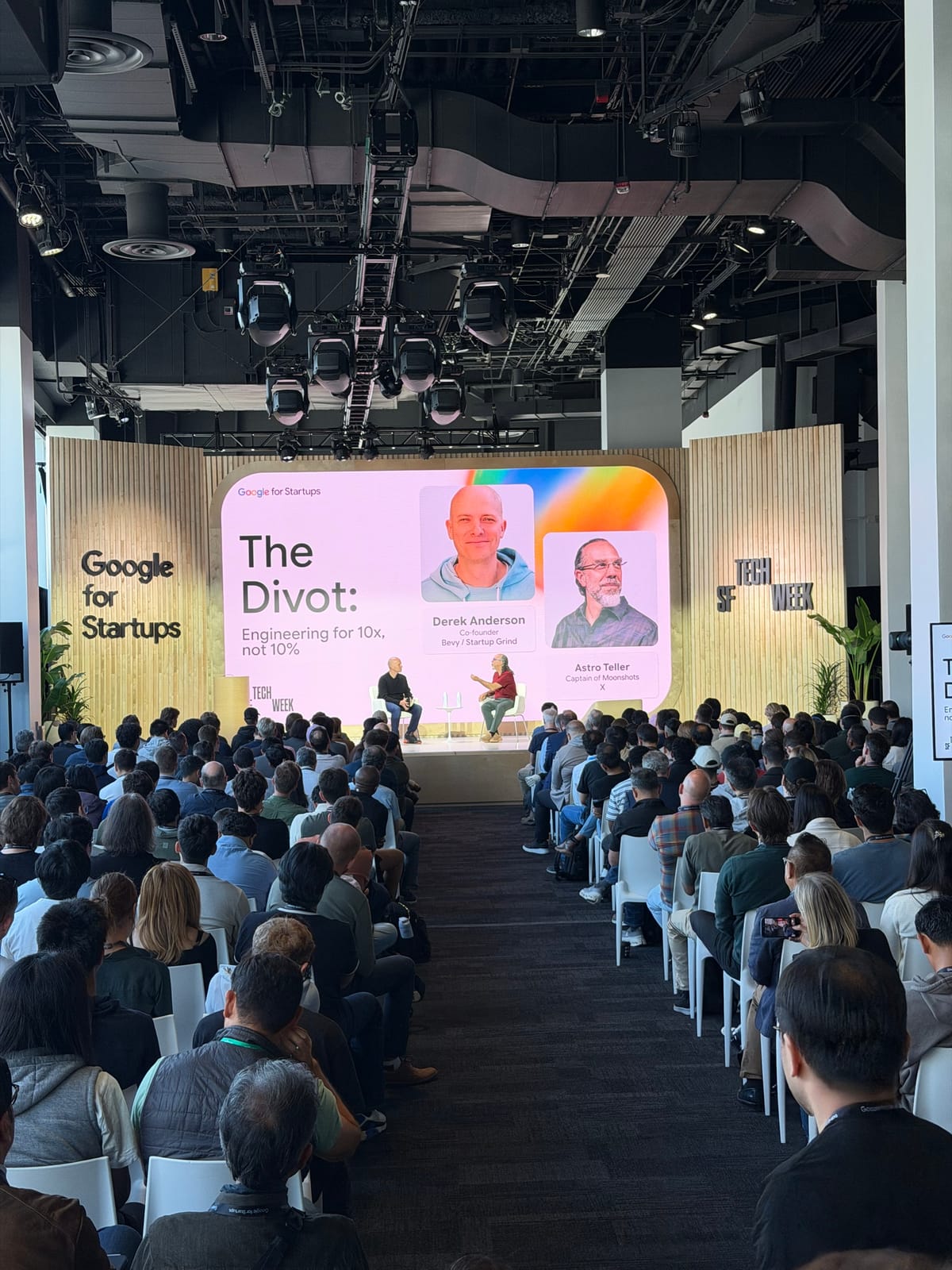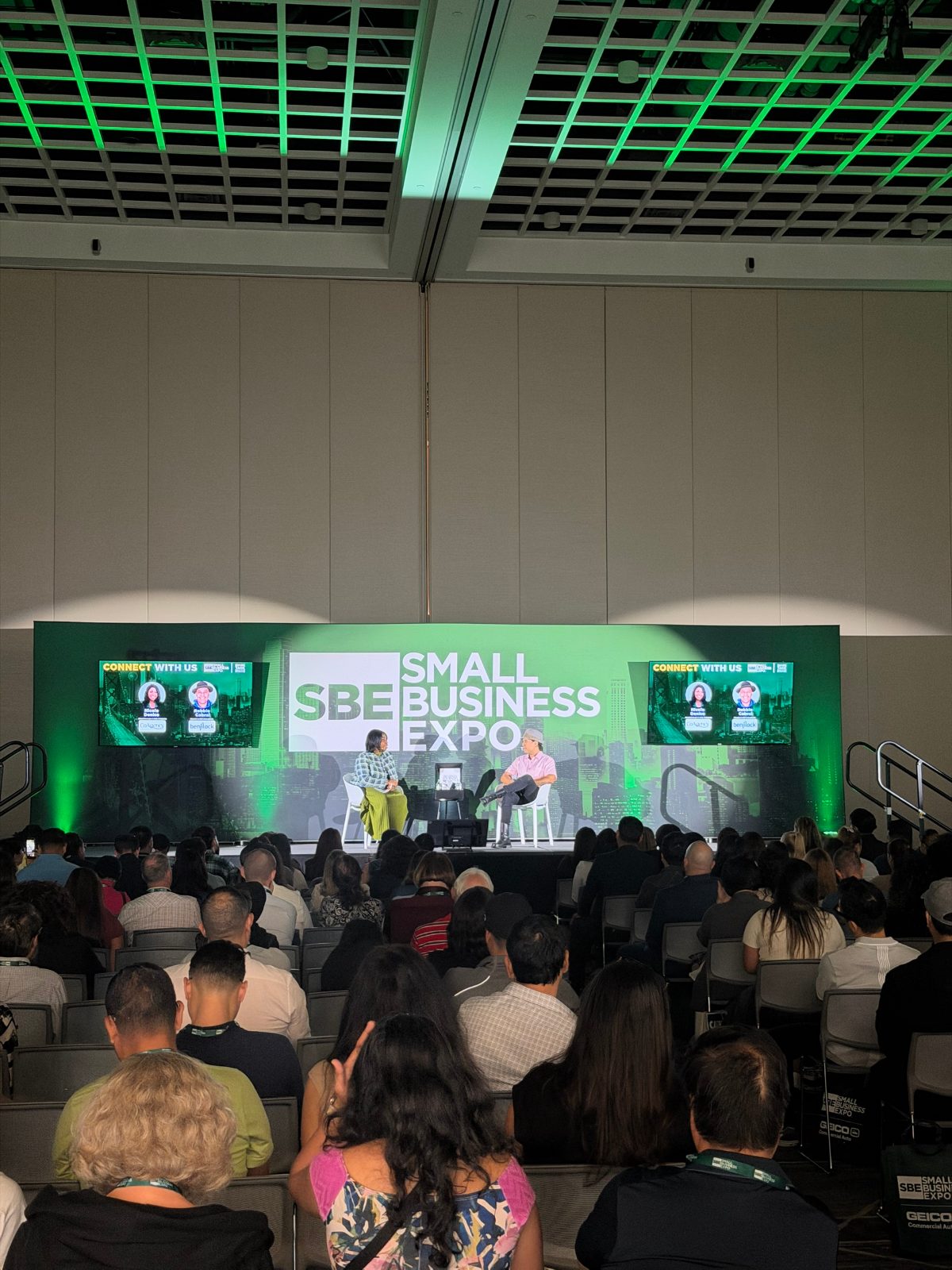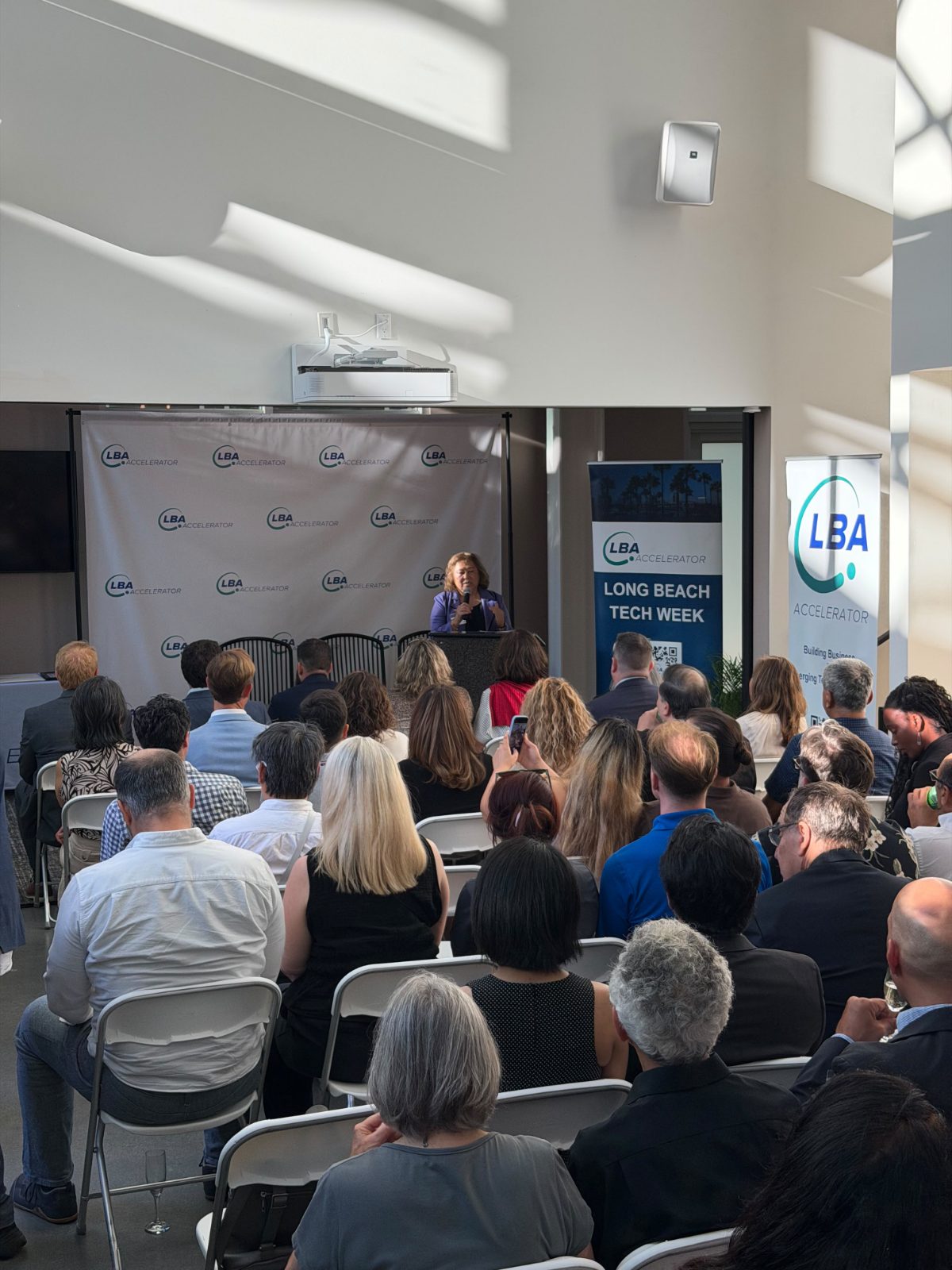
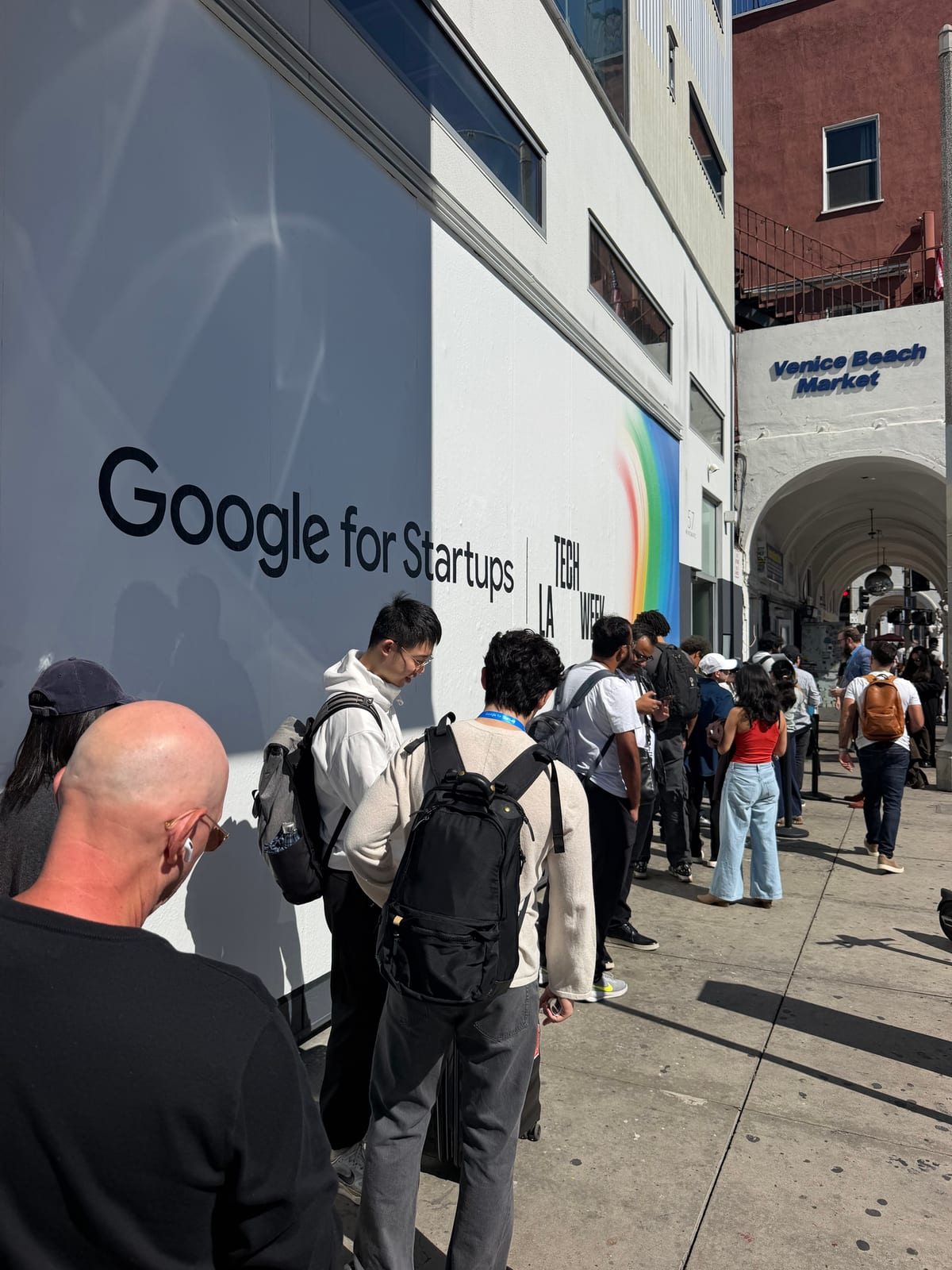
One week after San Francisco, the Tech Week format moved south. LA Tech Week ran from October 12 to 18, with hundreds of independently hosted events across the city. My week ran from a Visa coffee morning in Santa Monica, a line around the block for Google in Venice and a health and wellness summit a short walk away, to an AWS workshop and a full-day AI summit inside the Spruce Goose hangar in Playa Vista, and ended with two closing parties on Saturday night.
The energy was the same, but the conversation had moved on. In San Francisco the story was how cheap building has become. In Los Angeles, the rooms kept asking what comes after that: how do you prove AI is working, who is responsible when it goes wrong, and who pays for it?
Three questions every leader is getting
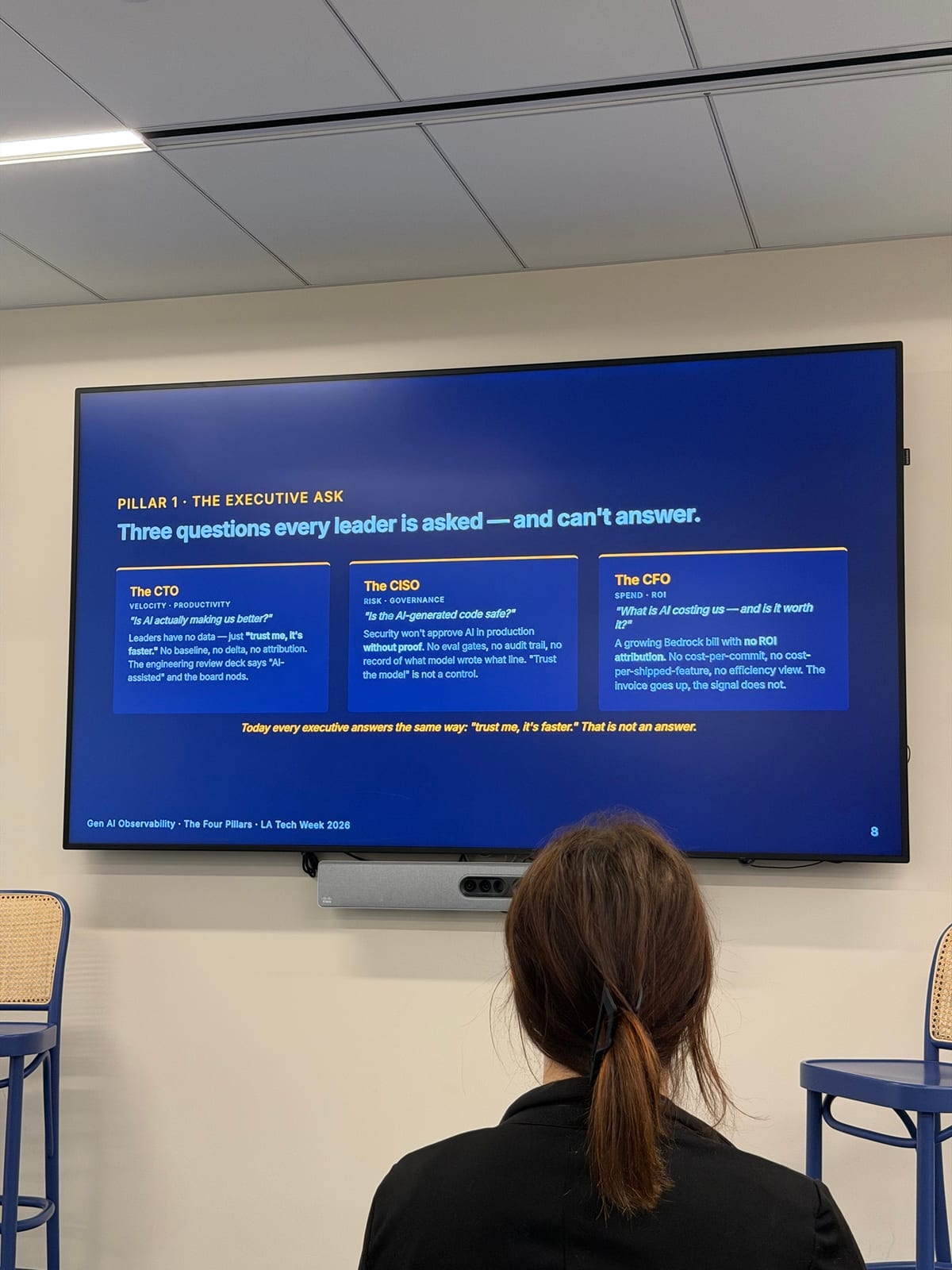
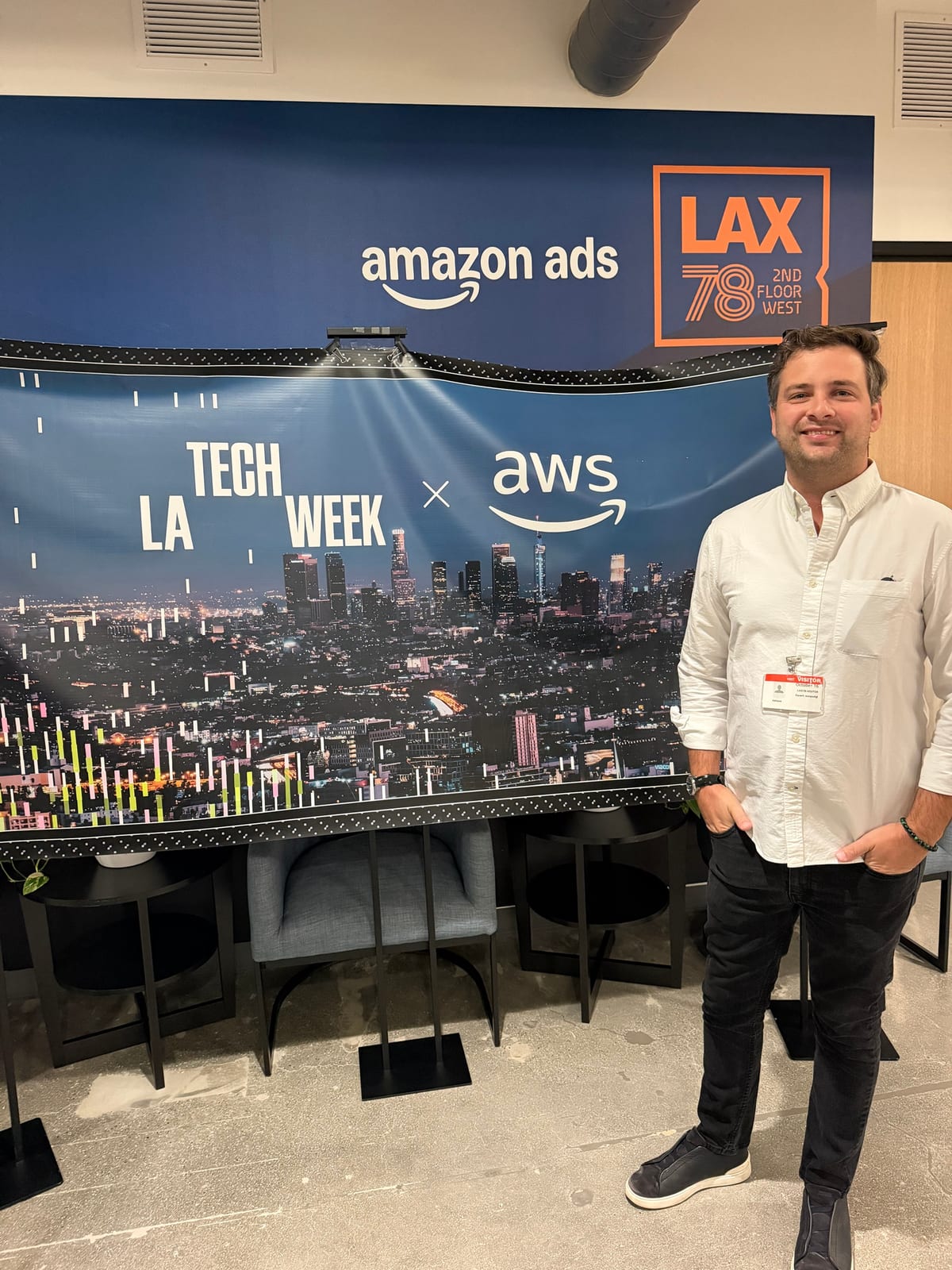
The clearest framing came from an AWS Startups workshop at Amazon’s Santa Monica office, Gen AI Observability for Engineering Leaders, presented by Sunil Paramel and Andrew Lee. It started with three questions that boards are now asking, each from a different seat:
- 01The CTO: is AI actually making us better?
- 02The CISO: is the AI-generated code safe to run in production?
- 03The CFO: what is AI costing us, and is it worth it?
Their slide summed up the usual answer: “trust me, it’s faster.” That is not an answer. Most companies are paying a growing AI bill with no baseline, no comparison and no way to say which tools are paying off.
Their proposal was to measure AI the way good teams already measure software delivery, in three groups: adoption (are teams using it), productivity (are they faster) and outcomes (is the result better, with fewer defects and security findings). The team also showed open-source tooling that tracks cost per commit and how much AI-written code actually makes it to production.
Two details stayed with me. First, cost has become the conversation. After a period of trying everything, the presenters said that almost every company they work with eventually gets serious about what AI is costing. Second, security mistakes are getting more expensive. They described companies that pushed cloud keys into public code repositories by mistake, and one that was hit with a bill of about $2 million. Their advice was to scan for secrets on the developer’s own machine, before anything leaves it.
Not everyone was convinced. The workshop was aimed at organizations with 20 to 200 or more engineers, and one founder in the room pointed out that most small teams will never set up dashboards like these. That is fair, and the session’s own closing slide had the better answer for them: pick the area that hurts most today, give it four weeks, and produce one number you can defend to your board by week two.
You do not need a dashboard. You need one AI number you can defend.
Governance is becoming a sales requirement
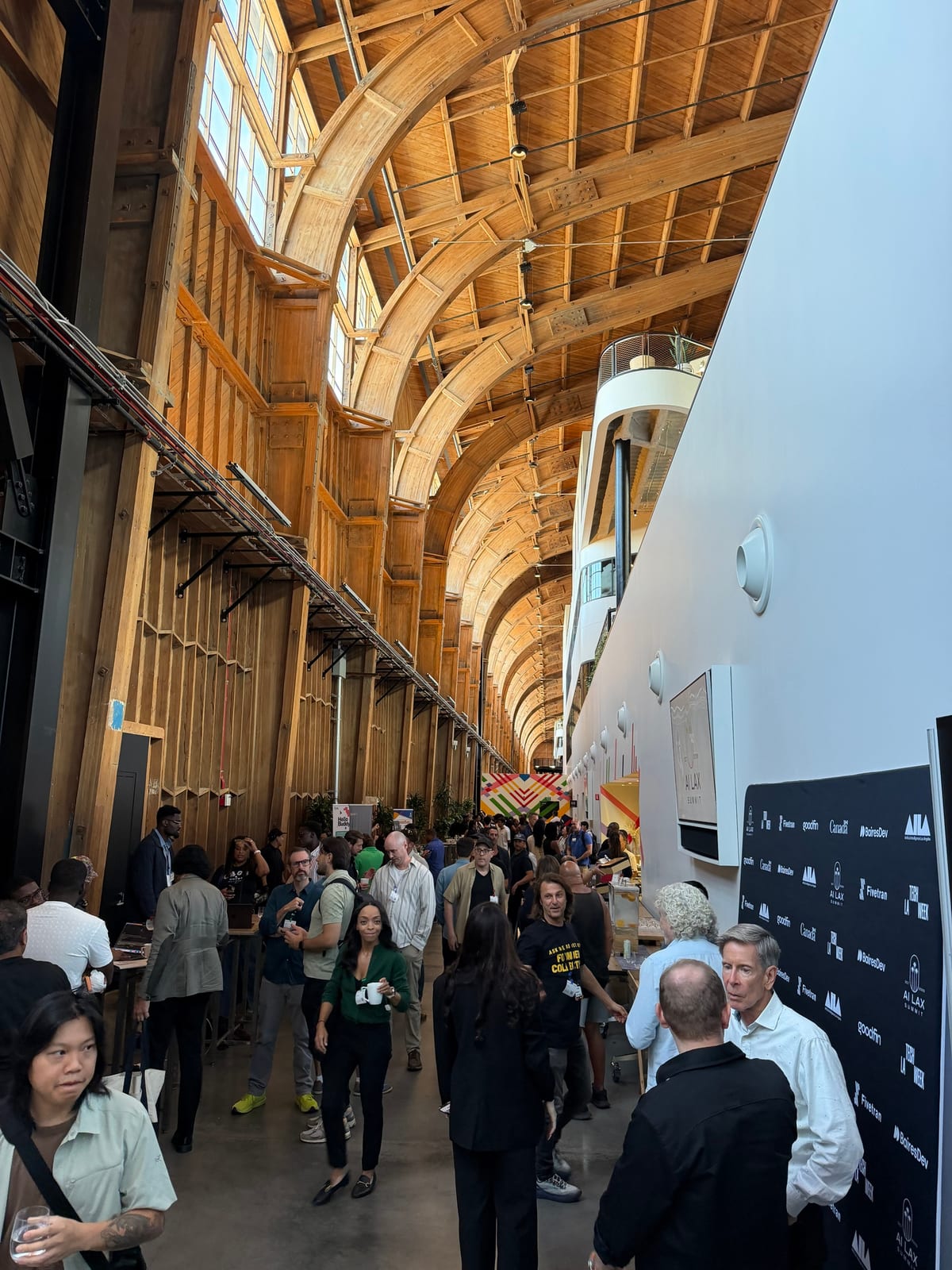
The same day, the AI LAX Summit, billed as Culture meets AI, filled Google’s Playa Vista campus, built inside the hangar where Howard Hughes built the Spruce Goose. Its tracks ran from AI in everyday life and agents at work to governance, infrastructure and LA’s venture economy. Its AI Governance & Safety panel brought together an investor, a partner from Morrison & Foerster, a security founder, a DeepMind engineer and another AI founder, and it was the most practical hour of my week.
The lawyer’s first question for any company was simple: are you building the AI, deploying it in your business, or just using it? It matters, because the company deploying it usually ends up holding most of the legal risk. Contracts are the tool for managing that. They should say who puts the protections in place, who can tell which AI agent did what, and who keeps a record of that activity that will hold up if something goes wrong.
The panel also agreed that the risk depends on the use. A company producing creative content worries mostly about intellectual property. A company running transportation worries about reliability and safety. The controls are completely different.
Who is accountable? The answer was the top: AI governance does not work unless the CEO and leadership team own it, which is why Chief AI Officer titles are starting to appear. But the panel added that everyone who builds a piece of an AI system owns its quality. As one panelist put it, AI is not a button you press.
The point I would underline for founders is where the rules will come from. Few startups have a governance process, and investors push them to move fast. So customers will set the requirements. The example given was a health system asking how to make AI safer, and the advice was to make specific safeguards a condition of the contract. For any company selling into US enterprises, expect AI questions to show up in security reviews and procurement, if they have not already.
An attendee in another session made the same point about Europe: the EU’s Cyber Resilience Act phases in through 2027, and US companies selling there will need security built into how they develop software, not added at the end.
Would you give an agent your credit card?
The most entertaining question of the panel was whether anyone lets AI agents shop for them yet. The answer was mostly “not yet,” but the way the panel thought about it was useful for any company deploying agents. Treat an agent like an employee with a company card:
- 01Know who it is and what it is allowed to do, and give it only the access it needs.
- 02Use credentials that expire quickly, so a mistake has a limited reach.
- 03Set spending limits.
- 04Have other agents review what it buys, the way a finance team reviews company cards.
- 05Require a human to approve anything big.
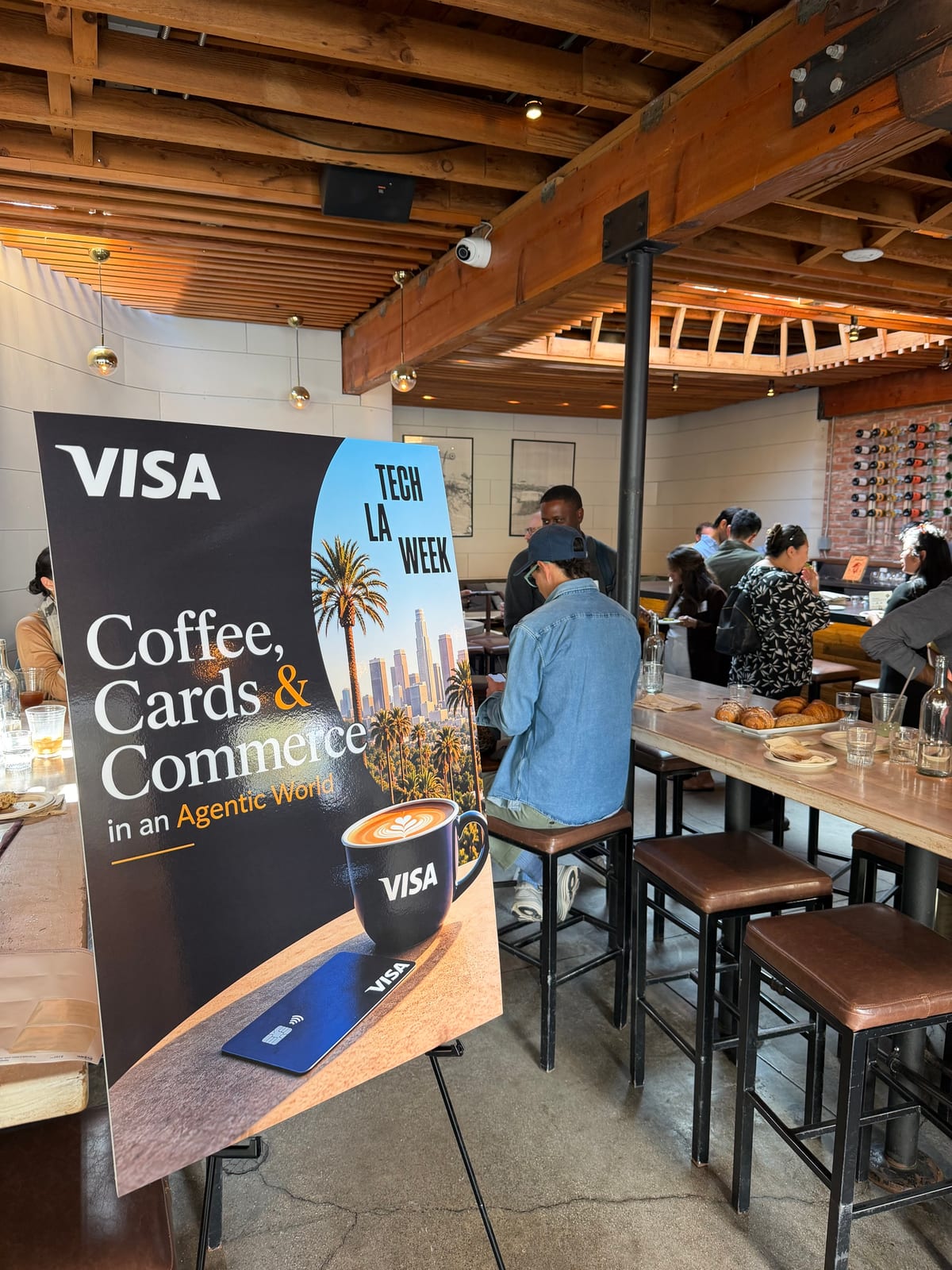
One panelist remembered when the advice was never to type your credit card number into a website. That advice did not last, and this will not either. Visa had opened that conversation earlier in the week. On Wednesday it brought founders, operators and investors to a Santa Monica wine bar for Coffee, Cards & Commerce in an Agentic World. It was deliberately not a panel, but an open conversation about how payments, identity and trust have to change when AI agents discover, decide and buy on someone’s behalf.
The plumbing matters too. Google’s hands-on codelabs in Venice the same day included a session on connecting agents to tools with MCP, the standard that lets an AI agent reach other software and data. Its description put the problem bluntly: most MCP servers in use have no authentication layer at all. If agents are going to hold the company card, the connections they use need locks first.
The physical limits of AI
The summit’s infrastructure panel, with speakers from NVIDIA, Google and the orbital computing startup Sophia Space, brought the conversation down to physics. The binding constraint is capacity: not enough chips, and not enough data centers built fast enough. Communities are also pushing back on the water, energy and grid strain that new data centers bring.
Some of the answers sound like science fiction but are not. Sophia Space builds servers designed to run in orbit. Its first customers are satellites, which, the founder said, throw away most of the data they collect because they cannot process it on board or send it all down to Earth. He said that a few years ago investors asked him why. Now they ask how.
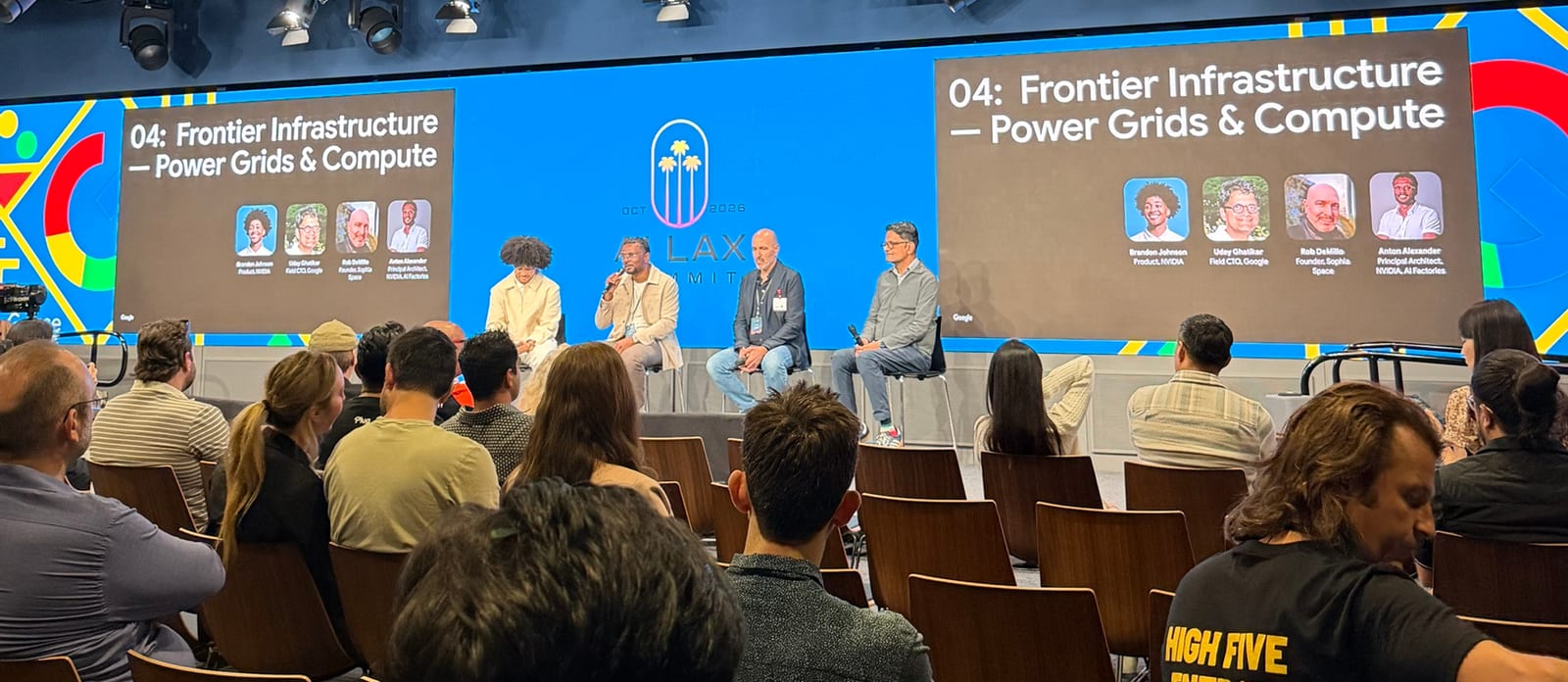
For founders, Google’s field CTO on the panel gave the most useful advice of the session. Customer needs change constantly in this market, so keep your options open: avoid locking into one chip, model or framework, and ask cloud providers for contracts that let you move to the next generation of hardware. Then he put the whole topic in perspective. He said he had never seen a single startup fail because its technology was not good enough. The real leverage is distribution and go-to-market.
Distribution still decides
That line connected the whole week. On the governance panel, the investor said he tells founders not to hire ten sales development reps when one person with the right AI tools can run that outreach, and to build their own sales workflows instead of buying expensive software. The goal is to spend the money where it matters: getting the product in front of customers.
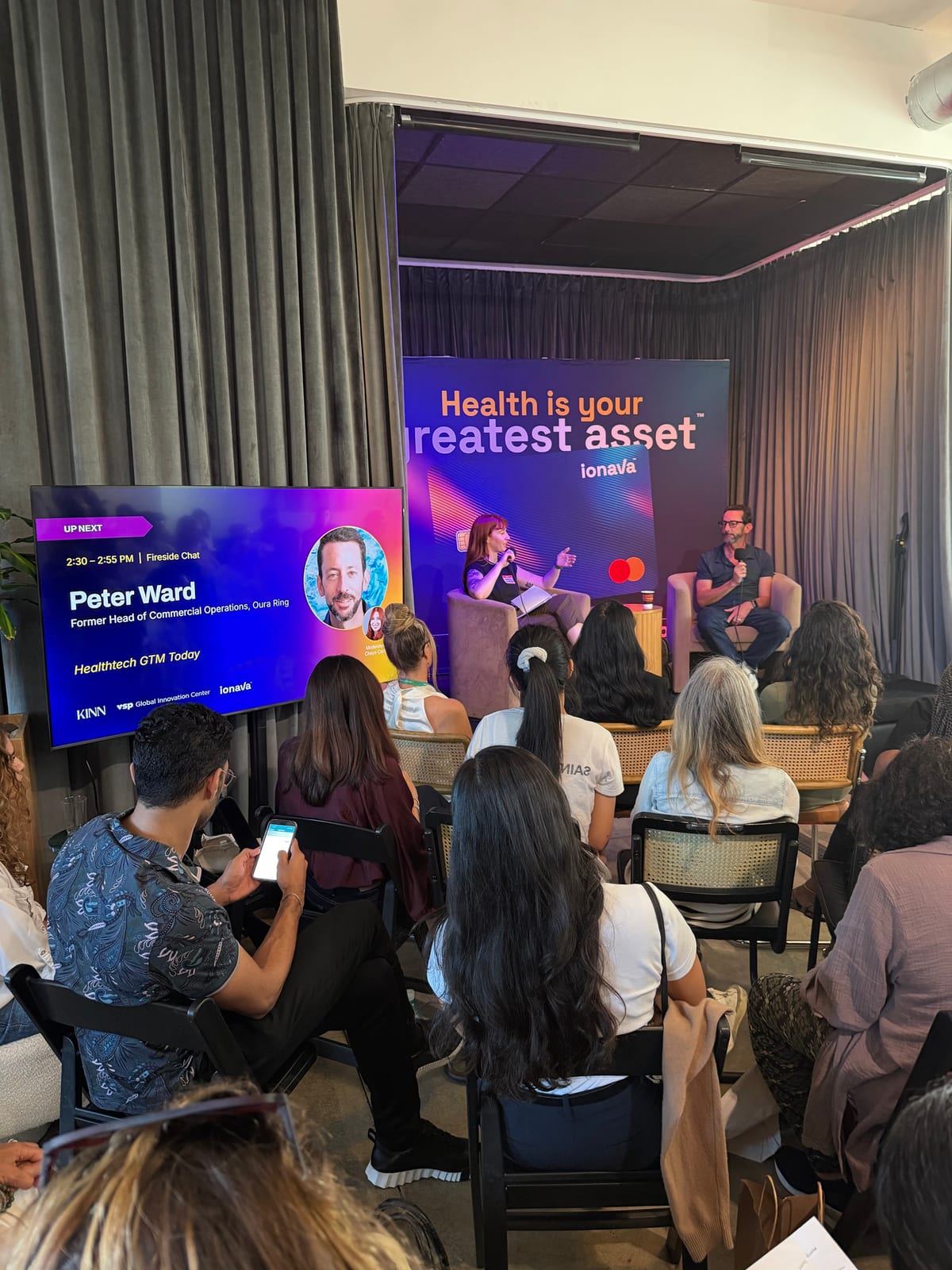
The same thinking showed up across the city. On Wednesday, the 2nd Annual Health & Wellness Innovation Summit, hosted by ionava, VSP Vision’s Global Innovation Center and The KINN, filled a Venice work club with founders, clinicians, investors and curious consumers. The agenda covered consumer healthcare, wearables and preventive health, financial innovation in health and AI-personalized wellness, with speakers ranging from a Stanford sleep researcher to founders of AI health companies. Peter Ward, former Head of Commercial Operations at Oura, sat down for a fireside chat on healthtech go-to-market, a fitting topic in a category where the product is rarely the hardest part.
A short walk away, Google filled its space at 57 Windward with builders. Developers trained in hands-on codelabs upstairs, while the floor below ran a startup event with a Startup Showcase, an Expert Lounge and offers from the Google Cloud partner ecosystem. The line to get in went down the block.
Los Angeles is its own market
For companies looking at the US, the lesson of the week is that Los Angeles is not a smaller San Francisco. Its strengths are different: healthcare and consumer health, media and entertainment, commerce, aerospace and space. Sophia Space, building servers for orbit, staffed up with engineers from JPL and the cloud industry. A health brand can find its go-to-market people here. Founders entering the US should choose the city that matches their market, not the one with the most famous zip code. Even the sponsor lists made the point: the AI LAX Summit counted the Consulate General of Canada among its partners, next to Google and Fivetran.
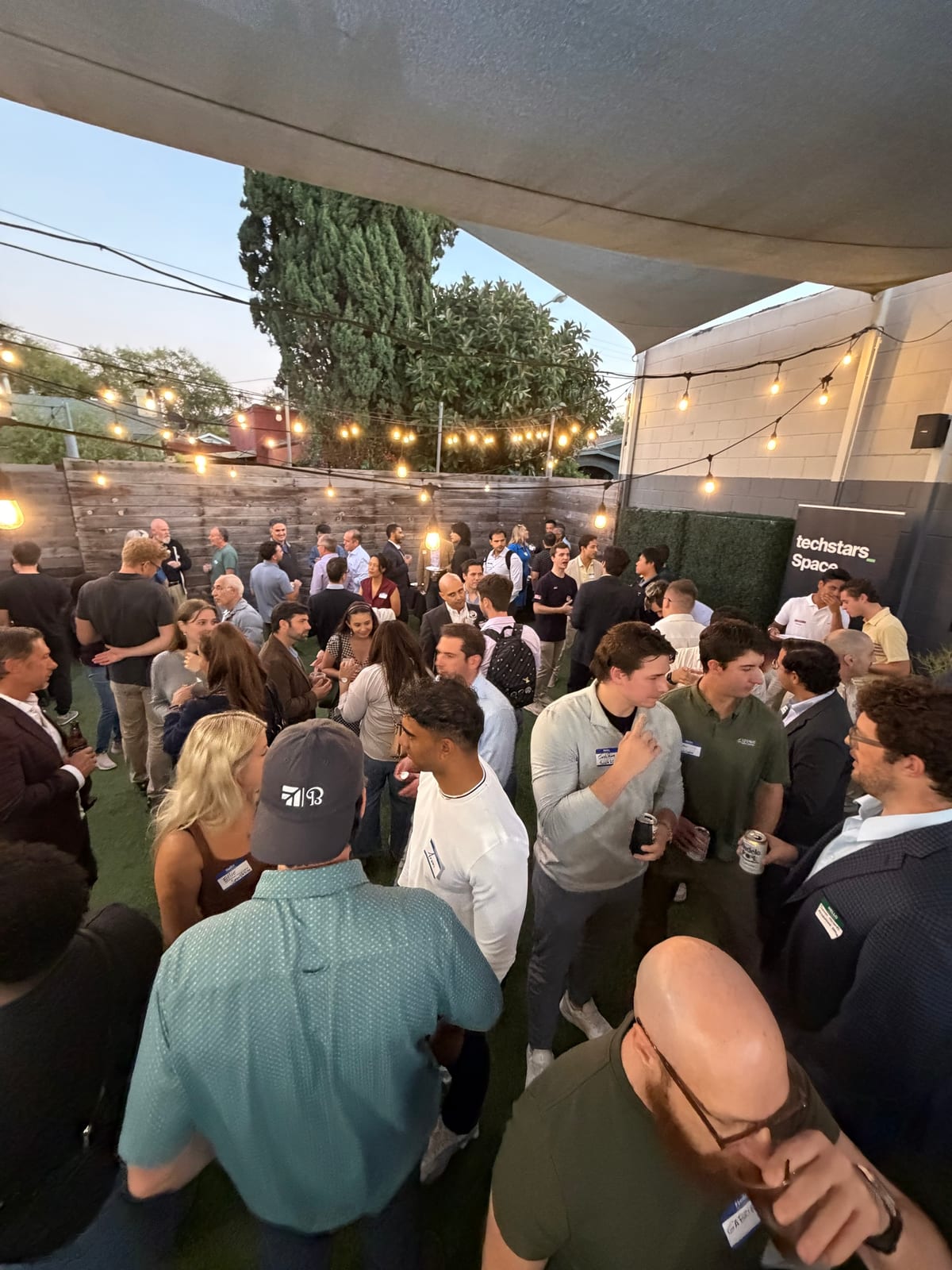
Aerospace is the clearest example. On Wednesday evening, Techstars hosted an Aerospace & Defense happy hour at its Culver City office with the US Space Force and NASA’s Jet Propulsion Laboratory, sponsored by Leonid Capital Partners and Wilson Sonsini, with more than 600 people on the guest list. The Techstars Space Accelerator runs in partnership with both, and it is built for an interesting kind of company: businesses from other industries, such as automotive, agriculture, energy, mining, finance and manufacturing, that want aerospace as their main route to market, along with technologies like autonomy and robotics that can cross over into space.
That is a market-entry lesson in itself. A company does not have to be a space company to sell into aerospace and defense, but it does need the right door in. In Los Angeles, accelerators, specialist lenders and law firms with dedicated space and defense practices are all in the same room, and on Wednesday night they were all on the same patio.
The week ended the way only Los Angeles would end it. On Saturday night, CarClub closed out Tech Week in its new clubhouse, with exotic cars, LED walls, projection mapping and more than 1,000 RSVPs, while SVRN, a network that connects family offices, angels and VCs, hosted its After Hours party on the Third Street Promenade. Tech here mixes with cars, culture and private capital, and the parties are part of how deals get started.

If I had to turn LA Tech Week into advice for a company adopting AI in 2027, it would be this:
- 01Pick one AI number you can defend to your board within a month.
- 02Know whether you build, deploy or just use AI, and write your contracts accordingly.
- 03Give AI agents the same controls you would give an employee with a company card.
- 04Keep your infrastructure choices flexible. The hardware and models will change.
- 05Spend what AI saves you on go-to-market. That is still where companies win or lose.
Were you at LA Tech Week? I would like to hear what stood out to you.