AI is everywhere in the narrative right now. In real projects, though, I still see many teams stuck in the same place. They run a proof of concept, everyone gets excited for a moment, and then nothing really changes day to day.
Stuck in the pilot phase
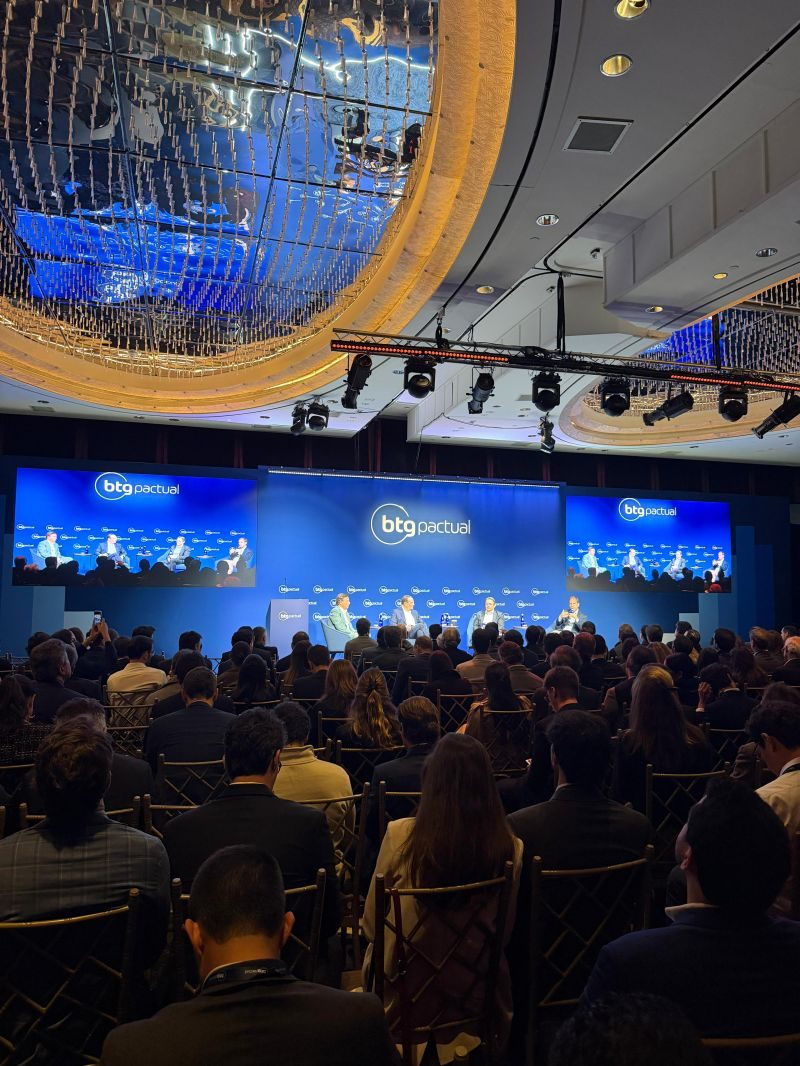
At the BTG Pactual Tech Day during Brazil Week in New York, the conversation went exactly where it needs to go: beyond AI as a buzzword and into AI as execution, efficiency, infrastructure, talent and business transformation.
One of the strongest points was that most companies are still experimenting. Many are running dozens of small projects, testing tools and creating internal excitement, but without structural impact. The real shift happens when companies move from experiments to focused use cases that reduce cost, improve productivity and eventually create new revenue lines.
Most of the time, the problem isn’t the model. It is everything around it. Data is scattered. Systems don’t talk to each other. No one is sure who owns the product after the innovation phase ends. Security and governance questions stay in the background until they suddenly block the rollout.
Three questions before you start
Before starting any AI initiative, I like to ask a few simple questions:
- 01What decision or workflow will actually change if this works?
- 02Who is going to own this six months from now?
- 03How will we know this is more than a cool demo?
If those answers aren’t clear, it is usually a sign to slow down, not speed up. The teams that treat AI as a product, not a one-off experiment, are the ones that see impact.
Brazil’s advantage: applying technology
Another point from New York stayed with me. Brazil may not be the country building the largest foundation models, but it is very strong at applying technology. Brazilians adopt fast and adapt fast. The country has massive usage of WhatsApp, Pix, digital banking, marketplaces, streaming and social media. There is a real intuition for practical technology.
Combine that with some of the country’s biggest inefficiencies, in legal, healthcare, public safety, financial services and education, and the opportunity for applied AI becomes very real. Real problems, real scale, real impact.

A leadership problem, not a technology problem
At Stripe Sessions, Patrick Collison and Sam Altman made a similar point from a different angle. Yes, AI is changing how we write code, but that is the obvious part. The bigger change is how it is reshaping decision-making, internal workflows and how companies operate day to day.
It is less about doing things faster and more about rethinking where time and effort should go in the first place. The companies that get the most out of AI won’t be the ones experimenting on the side. They will be the ones that integrate it into how they work, across the board.
That is not really a technology challenge. It is a leadership one. It forces you to rethink how teams are structured, how decisions are made, and what is even worth building. The next cycle will not only be about who has the best tools, but who has the people capable of applying them inside companies, with business context, technical understanding and the right mindset.
We are moving from building more to building smarter.